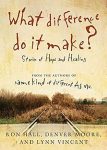
A modern-day slave, an international art dealer, and the unlikely woman who bound them together. Such reads the tag-line for this book.
Same Kind of Different As Me
by Ron Hall and Denver Moore
Ron Hall is the eminently successful, millionaire art dealer, Denver Moore the modern-day slave, and Deborah, Ron's wife, the woman who drew them together. The base of action is a Dallas-area homeless community.
Denver started life in Louisiana in a sharecropping family in the early 30s. He relates horrendous details about that life. The conditions of that life were appalling; the sharecroppers' plight truly was akin to slavery. Denver escaped in the early 60s, hopping a freight train, ending up in Dallas. But, as an illiterate, unskilled African-American, he had little hope of gainful employment and wound up homeless.
 Deborah had a heart for homeless people. She served food at the mission and branched out to help in other areas, earning respect and love from many, both the homeless and volunteers. At first, she had to compel Ron to work with her.
God sent her a vision about the homeless man, Denver, who was not a nice man. After Ron met Denver, their relationship gradually developed into a deep and abiding friendship.
Along the way, Deborah contracted terminal cancer. By this time, Ron, Debbie, and Denver had become close friends. Ron and Denver share their emotions journeying with her through this awful storm. Since many of these feelings and experiences are familiar to us dwellers, we can empathize with and learn from them.
Some quotes to think about
Can a good and powerful God allow suffering?
C.S. Lewis says, “The tortures occur. If they are unnecessary, then there is no God, or a bad one. If there is a good God, then these tortures are necessary for no even moderately good Being could possibly inflict or permit them if they weren’t.” (p. 230)
Dealing with lack of healing:
“And I cannot mask my profound disappointment that God did not answer yes to our prayers for healing. I think He’s okay with that. One of the phrases we evangelicals like to throw around is that Christianity is ‘not a religion; it’s a relationship.’ I believe that, which is why I know that when my faith was shattered and I raged against Him, He still accepted me. And even though I have penciled a black mark in His column, I can be honest about it. That’s what a relationship is all about.” (p. 230)
People's words and actions:
(quoted in a sequel, What Difference Do It Make?)
“It angered me that people might think some pat little Christian phrase would quench the inferno of my grief. At other times I realized people meant well and, mainly, spoke wounding words because they didn’t know what else to say.” (p. 79)
“There were just a couple of people who did know what to say: ‘I can’t even imagine how you must be feeling, but I just want you to know that I love you.’ Those were the people who climbed down with me into the pit of my grief and stayed with me. But the grief pit is a pretty nasty, slimy place, and most people don’t want to get down in it.” (p. 79)
Summing up
If you’re wondering what the title means, Denver explains: “But I found out everybody’s different – the same kind of different as me. We are all just regular folks walkin down the road God done set in front of us.” (p. 235)
I think that also applies to us ill-folk and to the well-folk. May we all walk well the road on which we find ourselves.