Living with Chronic Illness

Sunbreaks in Unending Storms by FJ and Carole Griffitts

An active woman, wife, and mother of two young boys, Carole worked part time as FJ attended graduate school. Two years later, undiagnosed pain and weakness dominated her life; she was still a wife and mother, FJ had graduated, she had everything to live for, but she would never again be able to lead an active life. FJ and Carole are uniquely qualified to co-write this book having lived over 40 years with her unstable, progressive, invisible disabilities. Carole writes from her standpoint as the person affected by severe limitations while FJ writes from his perspective as the spouse and caregiver. FJ’s professional background as pastor and Army Reserve Chaplain coupled with his experiences coping with his wife’s ordeals provides an unusual perspective as he coauthors this book.

FJ and I use our forty-plus year journey, detailed stories of three other families, and short input from still others to showcase life with invisible disabilities. These families represent a variety of challenges. We present this book from the family’s viewpoint since these conditions affect the whole family.
FJ and I recount our story in depth, along with lessons learned and unlearned. The remaining chapters deal with problems, tips, and suggestions for solutions in the areas of practical issues, emotions, relationships, and spiritual questions.
As the title suggests, we represent our lives in weather terms.
Available on Amazon and other online retailers.
For more info about our book, see Our Book.
We have a website for our writings at Sunbreaks Books.
Finding a New Normal by Suzan Jackson
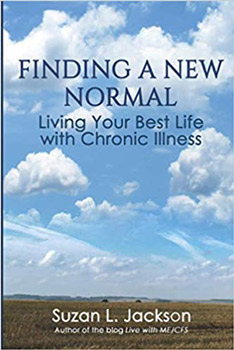

Suzan Jackson’s Finding a New Normal: Living Your Best Life with Chronic Illness offers advice about living with chronic fatigue syndrome (CFS) and several other chronic illnesses. Her two sons developed CFS while children; one son no longer has it, but the other also contracted Lyme disease. So, Sue incorporates advice for parenting chronically ill children.
I recommend this book not only to those undergoing their own challenges, but also to family and friends of these people.
This book is especially good for people with newly diagnosed unending conditions; it demonstrates you can survive and thrive, while still having a purposeful life. And it is helpful for those who are having difficulty coping.
Sue writes about four major areas in our lives.
Emotional coping
“Riding the Chronic Illness Roller coaster,” deals with our changeable emotions, especially grief and depression.
She talks about taking one day at a time, balancing hope and acceptance. Sue suggests the need to roll with the punches and proposes you may be right where you need to be. She challenges you to think about how your illness has changed you and talks about spring cleaning your spirit. Each of these sections comes with specific suggestions for dealing in these areas.
Daily life
Sue talks about the need to find joy in each day and explains her “Joy Journal.” She deals with “Plan B” days: “You know what happens when you push past your limits with chronic illness: you wind up flat on your back the next day—and possibly for many days to come. … My way of coping is to call it a Plan B Day and to change my attitude accordingly.”
She recommends getting outside, even for a few minutes. Spending time reading and playing and celebrating is beneficial. She talks about ways to travel successfully.
Sue recognizes a huge problem for us: “Even when you are doing something you enjoy or spending time with people you love, your mind is constantly reviewing your symptoms and status, considering your restrictions, and adjusting your body to meet your needs. This isn’t neurotic; it’s necessary. Eating the wrong food, doing too much, or just standing for too long can result in serious consequences that last for days or longer.”
Relationships
Sue covers a variety of aspects concerning relationships. She includes how much to tell others and how to keep up relationships when you’re so isolated. She includes two sections, with practical ideas, on parenting a child with chronic illness.
Improving your life
Finally, she ends with fascinating thoughts covering setting goals and envisioning your future. She refers to expanding your world with online learning, including an array of resources.
This book expands on all these ideas with specific tips to aid you in living your best life.
Find her book on Amazon.
Follow her on her blogs: Live with ME/CFS and Book by Book.

Diseases and Disorders
So Much More Than a Headache edited by Kathleen O’Shea

I read this book because my good friend has a rare type of migraine, some of which last months. So, I wanted to learn more about what she experiences. For several years, I had migraines but nothing like my friend’s. After reading this book, I understand that many migraineurs suffer unusual symptoms.

I learned a new term reading this book: migraineur, one who suffers from migraines. Ms. O’Shea is a 42-year migraineur and an English professor. She edited this literary anthology, arranging it in five parts. Part 1 speaks to what migraines feel like. Part 2 is titled, “What people don’t see: the invisibility of migraine.” The third part asks, “It’s just a headache?” Part 4 asserts that it’s a lifelong, full-time job. And part 5 deals with when it’s gone.
Rather than a textbook explaining migraines, So Much More Than a Headache is written by migraine sufferers in literary form. Some are presented as poems; others are written in prose; one is even a play. Many writers describe feelings that seem foreign or alien to those who have never experienced a severe migraine. Too many migraineurs are misunderstood and disbelieved.
I recommend this book for anyone who has a close relationship with a migraineur—a family member, friend, or coworker. This book would be helpful for anyone interested in what a migraine is like.
I leave you with these two endorsements.
- “Not only a wonderful resource for sufferers but also of great benefit for their families, friends, treating physicians, nurse practitioners, physician assistants, and medical students.” – Dr. Joseph Mann
- “O’Shea has done a service for those who are likely to have underestimated the depth and range of writing on this subject. Migraine can no longer be dismissed as ‘just a headache.’” – Patrick M. Murphy
Kathleen O’Shea is Professor of literature and philosophy at Monroe Community College in Rochester, New York, and a sufferer of migraines for forty-two years.
Order this book at Amazon.
Practical Issues

The Pain Companion by Sarah Anne Shockley

Do you live with chronic pain? Maybe it’s off and on again. Or maybe it’s 24/7. Do you have a plan to deal with your pain?
I just wish I’d had this book forty years ago, at the start of my journey. Most of what Sarah recommends, I had to learn by trial and error. Her ideas do work. She presents non-drug methods to hopefully lessen your pain.

Sarah hypothesizes that you can move beyond your chronic pain. She doesn’t claim your pain will go away; merely, that by employing these methods, you stand a good chance of lessening it.
Sarah herself has lived with debilitating nerve pain since 2007; nothing the medical community, therapy, or medications could do helped. This book results from her own experiences.
The Pain Companion does not advocate stopping medications or medical help. Rather, it offers ideas that supplement medical care. It explores emotional reactions and suggests practical steps to lower the pain level. Sarah keeps each chapter short and ends them with one of her letters to pain, or actions you can take, or a summary.
Part One: Pain Moves In
Each of these four chapters deals with a different aspect of pain. She talks about her journey with pain and about how pain can take over your life. Each chapter ends with a letter to pain.
Part Two: The Emotional Life of Chronic Pain
These nine chapters investigate the emotions connected with pain that doesn’t end. And Sarah includes our reactions to pain and what we can do about them. Each chapter includes steps you can take to deal with these emotions.
Part Three: Meditative Approaches to Physical Pain
In these seventeen chapters, the author gets creative. Even if her ideas may seem strange, read with an open mind; take what works for you; adapt if necessary. She presents exercises to aid in decreasing pain as well as to divert your mind from your pain.
Part Four: When Pain Is the Teacher
One of these seven chapters is provocatively titled, “Enlisting Pain as an Ally.” Check out this book to see how that can even be possible.
A closing caveat
Sarah says, “The Pain Companion is not meant to replace conventional physical remedies, medications, and procedures or the many excellent alternative healing modalities available today,” It is only a companion to guide you on your journey with pain.
The Pain Companion is available at Amazon and other retailers.
Resilience by Linda Grant

Resilience (the book) by Linda Grant teaches you how to bounce back. I can highly recommend this book to you. It is a book to buy, underline, digest, and go back to again and again.
Resilience. “Ability to recover readily from illness, depression, adversity, or the like; elasticity; buoyancy.” From that definition, resilience is a much-needed strength for those navigating a life of chronic illness with its unending quality and repeated exacerbations.
Obviously, learning about resilience is of significant interest to me. Having lived with invisible disabilities for forty years, anything that can help me bounce back quicker from those recurring mild to severe flare-ups would improve my quality of life. So I jumped at the chance to review this book. And I’m glad I did.

In Resilience: Powerful Practices for Bouncing Back from Disappointment, Difficulty, and Even Disaster, Linda Grant shows us that our brains can be retrained to respond better to difficult situations.
Ms. Graham does an excellent job of simplifying scientific words and ideas into layman’s language. She gives us a treasure trove of practical exercises, backed up by scientific evidence, which aids us in learning to cope with those disruptive times everyone faces. Ms. Graham includes ideas for Barely a Wobble (the mail was late), Glitches and Heartaches, Sorrows and Struggles (minor crises or major catastrophe), Too Much (grief, unending illness, job loss). Be prepared to work, though, to get the most help from Resilience. Sometimes, for us dwellers, a Wobble may seem Too Much! She illustrates how we can regain our footing in each of these situations.
This book is also helpful for people who experienced stressful pasts: abuse, grief, extreme stress. Ms. Grant shows how current responses are linked to earlier memories, but she presents evidence that even those responses can be changed, and healthier habits can be learned.
“Because resilience is truly recoverable, I have designed this toolkit specifically as a brain-training program to help you strengthen your capacities to bounce back,” writes Graham. “You will find more than 130 experiential exercises that will train you — and your brain — to steady or right yourself no matter what is happening around you, to respond skillfully to the most common and the most challenging external stressors, and help you work through any negative internal messages you may be believing about your ability to cope with those stressors.”
When you pull resilience practices together — mindfully practicing gratitude while walking in nature with a friend, calling on your compassionate friend to soothe the distress of any inner part — your resilience becomes almost unshakeable. You will be equipped to cope with anything and everything, and to trust that you can cope.
Buy on Amazon. New World Library has an earlier version: Bouncing Back.
Check out her website.
Panic Free by Tom Bunn

“In a state of near panic, most people are simply incapable of rational thought. Under stress, imagination takes over, and a situation that is not life-threatening is experienced as life-threatening. That is the first factor that causes panic. The second is the conviction that this situation, truly believed to be life-threatening, cannot be escaped.” (17) Thus begins Panic Free: The 10-Day Program to End Panic, Anxiety, and Claustrophobia by Tom Bunn; it includes strategies to overcome panic attacks, strategies that work in the real-world.
MEDICAL DISCLAIMER: Bunn points out that the symptoms of a panic attack are the same as those of potentially dangerous conditions. He urges people to see their doctors to be sure what they are dealing with.
Panic Free presents excellent explanations in layman’s language about the brain’s part in panic. It includes specific strategies, with clear step-by-step instructions, to combat panic, anxiety, and claustrophobia.

“Panic Free offers a step-by-step solution for training the brain to stop panic before it starts. In parts 1–3 of the book, Bunn explains the physiological and psychological mechanisms that lead to panic. Then, in part 4, he guides the reader through a ten-day program to establish automatic control of panic, so they can learn to put the frustration, worry, and distress of panic and claustrophobia behind them, both in the air and on the ground.”
Kim Corbin
“When you start to experience panic, you may try to control your reaction consciously. But that may not work, for two reasons,” writes Bunn. “First, your capacity for conscious thought, located in the cortex, breaks down when stress hormones build up. Second, conscious thought may not activate the parasympathetic nervous system. The solution to panic is to train your unconscious procedural memory, located in the subcortex, to calm you automatically, by repeating the exercises in this book.”
Bunn presents a 10-day program to retrain the affected areas of the brain. These are specific strategies, spelled out understandably. His clients, including a seventy-eight year old, have all experienced relief and the freedom to live normal lives.
What is the difference between anxiety and panic? Bunn answers that in anxiety, you think something terrible could happen, but in panic, you are sure it is happening and can’t be escaped.
I advise you to take good notes as you read Panic Free. Bunn cites many facts, and notes will help you keep track of the information. You will more easily remember their functions, how stress and panic affect them, and what you can do to alleviate the problems. Bunn does an excellent job of “de-scienceing” the terms. But keeping track of everything can be difficult.
If you have panic attacks that you have not been able to overcome or if you even just experience stressful situations, I hope that this book helps you.
Book can be purchased at Amazon.
Read more about the book on its website.

Emotions
The Humidity Makes My Hair Frizz and It’s Really Starting to Stink in Here! By Shelley Jarl

Ever wondered about God giving us the desires of our hearts? What it means – or doesn’t? Humidity Makes My Hair Frizz draws comparisons between Noah’s family and Shelley’s journey to owning a home. Along the way, the author combines her story with questions and Bible verses to stimulate your thinking. All in all, Shelley Jarl’s book should deepen your understanding of the relationship between God and our desires.
Shelley shares the following to encourage you when facing invisible suffering.
1. Allow yourself to feel.
God created us as emotional beings. We were meant to feel, cry, laugh, etc. It’s ok to feel. It’s ok to cry. But I also believe it’s important to not get stuck in them. If you are feeling weepy, weep, but then find something joyful to do, or someone to bless in some way.
2. Pray
Sometimes in trials prayer comes with more difficulty. If you find prayer does not come easily, choose a Psalm and write it out as your prayer or open a hymnal and pray some of the words to a favorite hymn.
3. Trust that Your Faith is Being Refined
1 Peter 1:6-7 “In this you greatly rejoice, though now for a little while, if need be, you have been grieved by various trials, that the genuineness of your faith, being much more precious than gold that perishes, though it is tested by fire, may be found to praise, honor, and glory at the revelation of Jesus Christ.”
4. Trust That There is an Eternal Perspective
God does not waste suffering. Your story is only a glimpse at a much larger context. It is all part of a story which ends with Christ’s return. Trust God’s plan and have an eternal perspective.
5. Don’t Forget to Do Good
Sometimes in the midst of suffering it is easy to get caught up in our own situation. However, if we take the time to look outside ourselves, this can somehow lighten our own burden. Find something to do as a blessing to others.
6. Trust That Your Character is Being Built Up
Romans 5:3-4 says “And not only that, but we also glory in tribulations, knowing that tribulation produces perseverance; and perseverance, character, and character, hope.”
7. Be Open to Being Used by God to Bless or Help Others
As someone who has endured through invisible suffering, you are uniquely equipped to be an encourager or helper to those who also suffer from invisible suffering. Pray for the Lord to give you opportunity to use your experiences as a blessing to others.
Shelley’s book can be ordered from Amazon.
Because Life Is a Daring Adventure is Shelley’s website.
Beneath the Surface by Kristi Hugstad
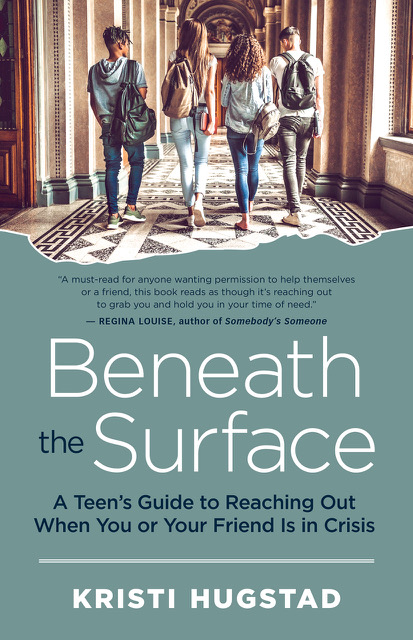
Beneath the Surface, by Kristi Hugstad, is specifically about and for teens at risk for suicide. But suicide is too common among the invisibly disabled community. These ideas can be beneficial for adults.
If you, or someone you know, is thinking about suicide, get helpful info. Read this book.
If the person is already serious, TELL SOMEONE who can help. Or call this help line: 1-800-273-8255.
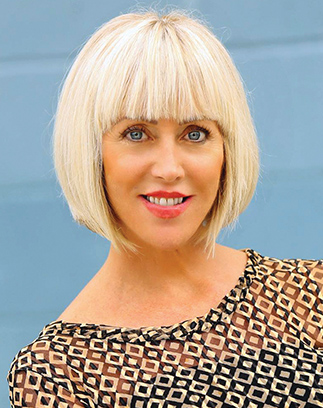
Ever since her husband completed suicide in 2012, after years of struggling with clinical depression, by running in front of a train, Kristi has dedicated her life to helping to abolish the stigma of mental illness and suicide. She is a certified grief recovery specialist.
Have you wondered how to help someone you suspect might be drowning “beneath the surface?” This book can help you with ideas. Kristi says, “Reach out and listen, be compassionate, and get assistance as necessary.” She enlarges on each of these areas in her book. She offers specifics about how to put each of these spheres of influence into practice. Of course, since each case is unique, her advice must be individualized.
These ideas apply especially to a friend or family member. An ongoing relationship is beneficial. However, if you know anyone in trouble, find someone, even if a hotline, to help. But remember, that help might be lifesaving.
Listen to Kristi’s podcast, The Grief Girl.
Buy her book at Amazon or New World Library.
Spiritual Helps

Hope Amid the Pain by Leslie McKee
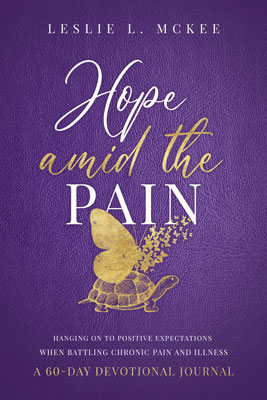
Leslie McKee’s Hope Amid the Pain: Hanging On to Positive Expectations When Battling Chronic Pain and Illness is a devotion book for people with chronic illness. She writes as a chronically ill person herself. Her experiences parallel mine, even though our problems differ.

Each of the 60 days examines one subject about the pain and disabilities we endure. She speaks of the need for patience, talks about how God sees us, and the protection God offers us. These are just a few of the matters she covers.
She writes comforting and thought-provoking daily devotions, including questions for us to dwell on.
She lets her beliefs show when she states, “Chronic pain and illness are always changing. Blessedly, the Lord is constant.”
Who Leslie Is
Leslie is an editor, author, and reviewer, but editing, writing, and reviewing are not merely jobs—they are her passions. Leslie is an avid reader with an eye for detail. Leslie has been a chronic pain warrior for more than twenty years, so she is familiar with the peaks and valleys associated with living with a chronic illness. She has felt God come alongside her through His Word and remind her that the battle is His and she’s not alone. Leslie is a member of American Christian Fiction Writers (ACFW) and The Christian PEN. She has had devotionals published in Ellie Claire/Worthy Publishing compilation books. She’s also published flash fiction stories. In her spare time, Leslie enjoys reading, playing piano, crocheting, spending time with family and friends (and her turtle!), and rooting for the NY Giants.
I love Leslie’s acronym. “It’s possible to Hang On to Positive Expectations (HOPE) even amid the pain.”
Quick summary
- “You are not defined by your pain, illness, or disability.
- Your hope does not depend on your physical or mental health.
- You are perfectly imperfect.
- You are unique and special.
- You are never alone.
- You can do everything with Christ.
- You are loved by the Lord.”
From the back cover
“Why me? Is God punishing me? Is my faith not strong enough for God to heal me? How can I achieve my dreams? What’s my purpose?”
If you’re someone living with a chronic illness or chronic pain, these are just a few of the questions you’ve likely asked on more than one occasion. You may feel overlooked or even resentful. You try to stay positive, but some days it’s hard. It’s natural to feel this way and grieve, but it’s still possible to have a hope-filled life. God has a purpose for the pain.
Christians aren’t immune from pain and illness, but we don’t have to go through it alone. Jesus promised that He would “never leave you nor forsake you” (Deuteronomy 31:6, NIV).
Find her book at Amazon.
Check out Leslie’s website for more information.
No Ordinary Invitation by Francee Strain

If you’re an inquirer into what Christianity is, you’ll find answers here. If you’re a Christian but thinking about leaving God, this book’s for you. If you’re a strong Christian, you’ll find thoughts to strengthen your love for Jesus, too.
Francee deals with Jesus’s invitation to us and all it can mean to us. It’s not about health and wealth, though that may be His plan for us. Rather, it’s all about the incredible love God—the Creator of everything—has for each person who will accept it.
Order Francee’s book from Amazon.
Read more of Francee’s writings on her website.

Children’s Books
Life’s a Polyp by Jenny Jones

Rare diseases. Know much? Do children? Not likely, but they are unlikely to find books about the subject. However, Jenny Jones has written a fun, informative one: Life’s A Polyp, with Zeke and Katie.
She wrote it for older children. But it works equally well for adults looking for an overview of FAP (Familial Adenomatous Polyposis). Life’s A Polyp comes with a helpful, even critical, glossary explaining unusual medical terms in simple words.
Zeke, a ten-year-old boy is the main character. The story begins with Zeke’s not-unusual symptoms. But when they continue and worsen, his mother realizes something is wrong. We then read of their search for answers. Medical professionals finally diagnose FAP. At that point, tough decisions must be made about painful and severe treatments.
In the hospital, Zeke meets Katie, a girl who also has FAP and has already had similar treatments. She shares with him her experiences, including wonderful support she has received.
Although this must be a difficult condition to live with, especially as a child, more people need to learn about this rare disease. It certainly qualifies as an invisible disability, and I’m sure people who live with it could use our support.
FAP is a highly personal condition, so it is up to the person involved to decide whether to share anything about it. However, if you already know someone who has it, you could use your ingenuity to discover how you could help.
In short, I highly recommend Life’s A Polyp. It is worth the read.
Order a copy of Life’s A Polyp at Amazon. Or ask your library to buy the book, so children can borrow it and learn about this rare disease.
See what Jenny has to say on her website, “Life’s A Polyp.”
I’m the Biggest Helper by Heather Foisy

Heather Yaskiw Foisy is a chronic illness patient, advocate, and author. Heather aims to help bring knowledge and resources to individuals in the chronic illness community. She has written a children’s picture book titled I’m the Biggest Helper with Momma’s Autoimmune Disease.
Heather has lived with chronic illness all her adult life, becoming ill at 20 years old. But it took years to get a proper diagnosis. She was diagnosed with Sjögren’s at age 28, and lupus at age 32. She is a mom, to a wonderful 7-year-old boy, who lights up her life.

During a health crisis, her son began to ask many questions. He didn’t understand why his mom was sick and wasn’t getting better. He didn’t understand why she couldn’t go to the park to play some days. He didn’t understand why she couldn’t get out of bed.
It was heartbreaking to try and explain it to him. And so, she looked for a children’s book to help with an explanation. She searched and searched but couldn’t find a book that fit her situation. It was in that moment, she knew if the book didn’t exist, she needed to write it. She realized that if her family needs this book, there are other families out there that need it too!
I’m the Biggest Helper with Momma’s Autoimmune Disease is a children’s picture book that teaches young children about autoimmune diseases in an easy-to-learn way. The book is broken into two sections.
The first section teaches children about autoimmune diseases, showing their invisible nature.
The second section gives examples of how a young child can help a parent or caregiver who may be in pain.
No matter whether child or parent, this book aims to educate and foster compassion. It is an excellent book for a family member, teacher, or friend who may have an autoimmune disease.
The book lists Sjögren’s, Lupus, Arthritis, MS, Crohn’s, and more!
Order Heather Yaskiw Foisy’s children’s book on Amazon.
Other Topics

Same Kind of Different by Ron Hall and Denver Moore
About homelessness

A modern-day slave, an international art dealer, and the unlikely woman who bound them together. Such reads the tag-line for this book: Same Kind of Different As Me by Ron Hall and Denver Moore.
Ron Hall is the eminently successful, millionaire art dealer, Denver Moore the modern-day slave, and Deborah, Ron’s wife, the woman who drew them together. The base of action is a Dallas-area homeless community.

Denver started life in Louisiana in a sharecropping family in the early 1930s. He relates horrendous details about that life. The conditions of that life were appalling; the sharecroppers’ plight truly was akin to slavery. Denver escaped in the early 1960s, hopping a freight train, ending up in Dallas. But, as an illiterate, unskilled African-American, he had little hope of gainful employment and wound up homeless.
Deborah had a heart for homeless people. She served food at the mission and branched out to help in other areas, earning respect and love from many, both the homeless and volunteers. At first, she had to compel Ron to work with her.
God sent her a vision about the homeless man, Denver, who was not a nice man. After Ron met Denver, their relationship gradually developed into a deep and abiding friendship.
Along the way, Deborah contracted terminal cancer. By this time, Ron, Debbie, and Denver had become close friends. Ron and Denver share their emotions journeying with her through this awful storm.
Some quotes to think about
Can a good and powerful God allow suffering?
C.S. Lewis says, “The tortures occur. If they are unnecessary, then there is no God, or a bad one. If there is a good God, then these tortures are necessary for no even moderately good Being could possibly inflict or permit them if they weren’t.” (p. 230)
Dealing with lack of healing:
“And I cannot mask my profound disappointment that God did not answer yes to our prayers for healing. I think He’s okay with that. One of the phrases we evangelicals like to throw around is that Christianity is ‘not a religion; it’s a relationship.’ I believe that, which is why I know that when my faith was shattered and I raged against Him, He still accepted me. And even though I have penciled a black mark in His column, I can be honest about it. That’s what a relationship is all about.” (p. 230)
A fascinating read about homelessness.
This book is available at Amazon. If you’d like more information about homelessness and how you can help, check out the sequel, What Difference Do It Make?

Fiction
Note about fiction entries
I will be adding additional fiction entries, some just entering series by one author. My fiction reading is limited to books by Christian authors, so that the books are clean romance or suspense stories.
King of the Crown Imperials by Joanna Alonzo
Type: Fantasy
I absolutely loved this novel. I did not want to stop reading, an unusual experience for me.

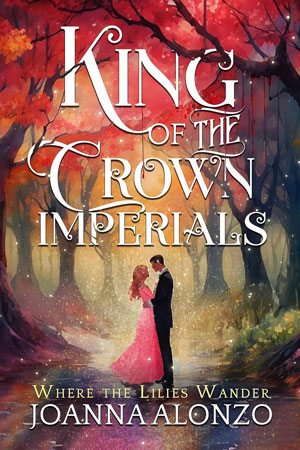
King of the Crown Imperials by Joanna Alonzo is a most unique book, a Christian fantasy based on the biblical book of Esther.
1993 ushers in the story of Vivienne Kristiansen who arrives to work in the fictional country of Ancoria, set in Southeast Asia in our real world. Unknown to Vivienne, her college friend who offers her a year-long internship is actually a member of the royal family.
The reigning prince, Philip, whose father experiences an unexpected, severe illness must temporarily govern this country beset by violence and a family who would like to be the royal family.
Political intrigues, betrayal, violence, and—yes—romance kept me riveted to the story to see what would happen next. This fast-moving adventure captivated me from beginning to end. Even though I know how Esther ends, I was curious to see how Joanna could bring it about.
This book is the beginning of a series set in Ancoria. Some of these stories are a retelling of fairytales. I am looking forward to seeing these new books.