Pets?
Therapy animals?
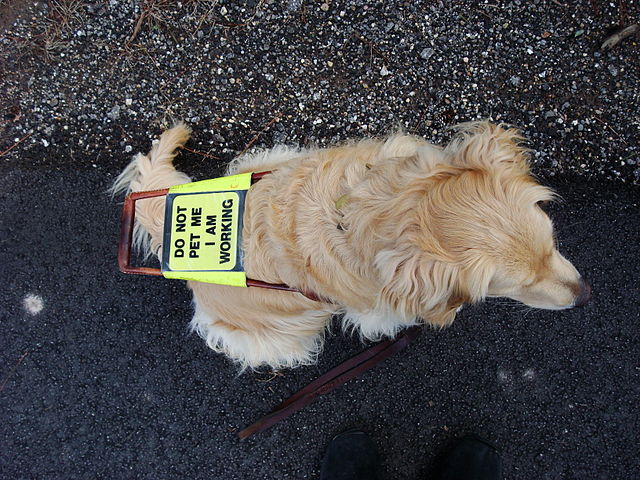
Service dogs?
Which do you need?
What’s your favorite animal? Dogs, cats, pigs, horses, hamsters, rabbits. Throughout history, animals have comforted, assisted, and performed work for people. They’re also fun companions.
If you’re disabled, you may need more help than a pet or therapy dog offers; you may need a trained service dog.
Choosing animals for individual assistance involves decisions that must be made before you choose your helper. What kind of help do you need? If you want a service animal, what training and costs are involved?
Decision #1: What kind of animal will work best?
Pets, therapy animals, or service dogs all help us.
Pets: Companion Animals



Many members of our group have pets and find great comfort in them; one even rescues and loves them.
- If you already have a pet you love, who comforts you and makes you laugh, keeping him might be the best choice. Pets for Patriots says, “We celebrate the extraordinary, innate therapeutic abilities of the everyday companion dog or cat.” They deliver physical and emotional health benefits.
- ADA says, “These regulations do not restrict people from training and using any animal to assist them in their homes and private spaces. Nonetheless, they will no longer be considered a service animal in relation to access of public places.”
- You might wish to have your pet trained as a therapy or service dog if he fits the criteria.
Therapy animals
Therapy animals (dogs, cats, rabbits, etc.) received training to provide affections and comfort in institutional settings, but they do not have the privileges that service dogs do.
“New Horizons Service Dogs, Inc. has placed service dogs in facilities to work with professional care givers, educators, or skilled volunteers in fields such as physical and occupational therapy, special education, hospice care and hospital visitation. Facility Dogs engage patients in activities to stimulate healing and recovery, provide comfort and unconditional love to the seriously ill or confined, and serve in teaching programs for students with special needs.”
Beware of where you get information about and certification for therapy dogs. See the American Kennel Club for a list of legitimate organizations.
Service Animals
If you need a service animal that can accompany you in public, it has to be a specially trained dog, according to the ADA. The work or task a dog has been trained to provide must be directly related to the person’s disability. The ADA also specifies it has to be a dog. These dogs must be accommodated by private businesses and transportation companies. See my previous post 1/8/16 for more information about service dogs.
Decisions #2-6: 5 Questions to Ask Before Partnering With a Service Dog
Based on Kea Grace’s article on Pawsable.
1.) Am I financially able to take on the costs of caring for a dog for 10 to 15 years?
- Obtaining a service dog is expensive: $3,000 – $20,000, including the dog, its’ training, your training, and travel costs.
- A few volunteer programs exist, such as Suzanne Brean’s program for training your own dog.
- Estimated annual upkeep costs are $1200-$1600.
2.) Are you prepared to care or arrange for care for a dog every single day?
- She is a living, breathing creature with a unique personality. He is not an inanimate object.
- Every day, he needs to be taken out, fed, cleaned up after, exercised.
- He needs ongoing training, grooming, vet care.
- How does your family feel about her?
- Are they willing/can they help?
3.) Are you prepared to always be the center of attention?
- Can you handle the stress?
- Whenever you go out in public, people will stare, point, gawk.
- If you’re invisibly disabled, they may yell at.
- Even when they’re nice, they may want to talk.
4.) Are you willing and able to accept the training and socialization obligations accompanying a Service Dog?
- You have to bond with, learn to communicate with, and maintain your partner’s training.
- On a bad day for the dog, you have to provide the structure, boundaries, and guidelines he needs to thrive and serve you.
- Remember your partner has to be able to interact well with people in public.
5.) Are you prepared to deal with conflict?
- “Not everyone is able to understand WHY you’d need or want a Service Dog and some relationships may suffer.” (Kea Grace)
- Invisibly disabled people, especially, can lose friends or family support who just don’t understand.
- There may be problems with co-workers or business people.
- Can you respond appropriately without anger?
If you’re dissatisfied with your current situation, or you know you need more help, research carefully because not all information is reliable. Choosing animals for individual assistance is a serious business.
What experiences have you had with an animal being helpful to you?