
No two ways about it. Our lives are hard. In several areas. But if we plan ahead, we can implement strategies that improve our quality of life. Read about some invisibly disabled coping strategies today.
I wrote this in 2014 concerning a new source of pain.
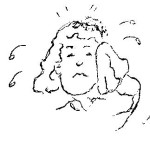
What do I do now?
Here we go again!
Last month, I began experiencing a sharp pain in the right abdominal and back area—in the area of the hip—upon certain movements. My physical therapist confirmed it was the hip. It was not too concerning since it was only occasional. We planned to fly to Washington, DC to see our son and his family for a five-week visit. Five weeks without access to my doctors or therapist except by phone.
Soon after arriving, the hip pain became frequent, increasing over the next few days. Today, most movements hurt. The pain, when it occurs, is severe. Two possible causes exist.
- It might be because of performing tasks differently. A reasonably easy fix: watch how I move and take my pain medications until the pain recedes.
- Last week’s successful Botox shot could have changed my body dynamics. If so, I am in big trouble because it will last in varying intensity for ten more weeks. Possible trip to Urgent Care for a pain shot.
So, now there are phone calls in to both the doctor and therapist. I pray, rest, change my movement, wait.
But, I am so tired of having to face new sources of pain. With the old pains, coping strategies are already in place. Some remain the same even with new pain. But when pain stems from an unknown reason, anxiety creeps in.
How I dealt with this day
- Journaled and prayed and sought God’s help.
- I found a prayer entry for myself that I’ve prayed for several years: trust in God and not the doctors.
- I am in DC and cannot see my doctors, so there is no choice but to trust God will help me with the pain.
- I found a prayer entry for myself that I’ve prayed for several years: trust in God and not the doctors.
- Took appropriate medications.
- Called medical people who could help me.
- I called my PT who advised certain exercises and agreed the successful Botox could be causing the change.
- I called my doctor. To call in a prescription for the muscle relaxer I neglected to bring with me.
Resolution
The pain receded surprisingly quickly by reducing the number of suspect movements, taking medication and using heat.
It still hurts some, but the level and frequency have both declined. The type of pain has changed; the awfulness has mostly stopped.
Back to today
Although these strategies dealt specifically with pain, you can transfer these principles to problems with emotions, relationships, and practical tasks.
Obviously, I had thought out these strategies beforehand. We need to realize the necessity for planning ahead. Let’s consider situations that may arise and develop ideas we can apply when the bad happens
I do not mean spend your time dwelling on what-ifs. If you’ve been limited for any amount of time, you know areas of likely stress. Identify them, think about ways to de-stress, and be ready to apply the strategies when bad things happen again.
My strategies
Evaluate
- Identify the problem.
- Figure out a possible cause.
- Come up with likely solutions.
Recall
- Look back at what was done in the past.
Act
- Consult specialists.
- Take appropriate medication.
- Adjust lifestyle.
- Pray.
To create your strategy
Evaluate
- What are your recurring problems?
Recall
- What worked in the past? What didn’t?
- Are you using a journal?
Act
- Acknowledge you can’t do it all.
- Don’t beat yourself up.
- Think of ideas to make your life worthwhile or fun.
- Listen to music.
- Read a book; watch a movie.
- Use meds, if necessary.
- Realize the battle is not ours, it’s God’s.
- Ask for help when needed.
- Join a support group.
- Find a supportive friend.
- See counselor.
Prepare
- Decide on your own workable ideas.
- Design the plan.
- Employ your strategies next time things go south.
So, how about you?
What areas do you experience recurring problems in? Great for you if you already have plans to help make those days easier.
If not, how about starting now? Evaluate where you are, remember helpful ideas from the past, and formulate plans to implement on those bad days that unfortunately always happen.
Good luck, Connected Carole