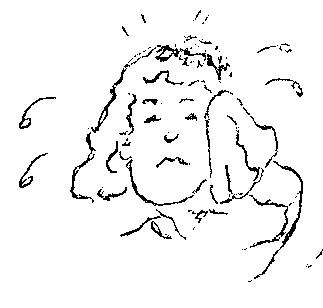

Stress management for invisibly disabled people. Really? But you’re so overwhelmed, and things just keep happening. How in the world can stress management work for you?

Sometimes, I truly feel that way. I have plans – essential things to do – and unexpected fatigability hits. Or maybe unpredictable pain strikes. Occasionally, it’s something good: a friend drops by, my brother calls, or it’s a beautiful day and we go for a drive. Whatever. My plans are shot, and the stress builds.
So, how do I handle it? Honestly? Often, not very well.

As a Christian, my first go-to should be God. Prayer, remembering Bible verses, listening to uplifting music, meeting with other Christians. These are all stress-reducers for me. They help me take the problem to God, leave it there, and rest in His peace. When unexpected or new challenges occur, fear results. And Psalm 34:4 helps me. “I sought the Lord, and He answered me.” It almost defies belief how many times that works!
But, frequently, my first reaction is frustration or anger. However, I soon try to calm down. Many times, I resort to escapism, usually through books. This especially works well when fatigue or pain is involved since I have to rest in my recliner.
But, back to you. Are you like me, or do you have different reactions to stressors? Maybe you also have other strategies to de-stress.
As invisibly disabled people, we can have more stress in our lives, and therefore need more stress management strategies. We are subject to all the unavoidable pressures that everyone has, but our challenges can add even more. Many individuals have unbearable people in their lives; however, due to our problems’ unseen nature, people’s disbelief can add additional hardships. And then, of course, are the unexplainable problems we deal with on a daily basis.
Ways to get the stress out
General helps
- Listen to music.
- Watch a video or TV.
- Read a book.
- Take a nap.
- Talk to a trusted friend.
- Do something helpful for someone else.
- Make a craft.
- Divert yourself by talking to someone about anything but the stressful situation.
If it is an
Unavoidable pressure
- Evaluate the situation to see if adjustments can be made.
- Employ your creativity when doing this.
- If no alterations will help, work on acceptance as that in itself reduces stress.
- Practice a strategy from the general list above.
Unbearable person
- Ascertain the reason, if possible, for their unpleasantness.
- Consider whether circumstances can be changed.
- If it is a matter of their not understanding, try again to explain things.
- Try to understand their point-of-view, if you can.
- Recognize they may never change.
- If possible, avoid them.
- If that is impossible, dig deep within yourself and find the charity to overlook their animosity.
Unexplainable problem
- Seek medical help, if applicable.
- Research the problem.
- Accept the unacceptable.
Important Note
If you live under crippling stress, are depressed, or think about suicide, these ideas may not work for you. You may need to see a professional. A good place to start is your primary care.
If you are considering suicide, please call the National Suicide Prevention Hotline: 1-800-273-8255. When you have time to read, check out “Suicide Prevention.”
Leaving you now
I hope something in the list above can help you manage your stress easier. Now, I have to apply these strategies in my own life!
Your Input
What helpful ideas can you add about stress management?
More Info
A disability itself can add to stress. This older pamphlet is still applicable today.
Another place stress can occur is self-care. This post can help you manage that.




Thanks for this practical help for dealing with stress in chronic illness. I have a neurological disease that adds plenty of stress to my life plus, some from the other categories you mentioned. I’ll definitely use some of your ideas! I’m thinking to add some reading to my routine. That used to destress me so much.
You’re welcome. For me, I couldn’t cope without my reading. And I try to apply Phil. 4:8 (yes, I read your article https://hopenomatterwhat.com/a-bible-verse-for-your-worst-days/ ) to it. Although since most of my reading (outside of spiritual things) is fiction for escape, “truth” doesn’t apply. I have changed what I read, though, by applying the rest of the words.
Wonderful post, Carole, with some great advice!
I included this post in my round-up on my own blog of inspiring posts for dealing with winter:
https://livewithcfs.blogspot.com/2021/01/weekly-inspiration-winter-boosts.html
Thanks for the inspiration!
Sue
Thanks, Sue. I’m having to apply this advice to myself!