Does your future look bleak?
Is your friend’s life devastated?
It may take awhile
It may look different
But life can be good again–even beautiful!
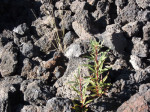
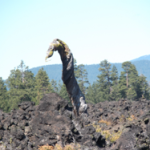
Desolation! The first impression of Lava Lands National Monument, near Bend, OR. Look again. See vegetation here and there. Glimpse the animals. Examine the area and see the many varieties of flora. Chipmunks, squirrels, and grasshoppers abound. A fortunate few might see a weasel, pika, or lizard. Wrens and other birds fly around.
Many years have passed since volcanic eruptions devastated the area. New life began, adapting itself to the harsh conditions. It’s not the same life as before, but can you see the stark beauty now?




People aren’t plants, though, nor animals. So, how do we recover from life-devastating events? First, we have to define “recovery.” Jerry Sittser, in his book A Grace Disguised, concludes this:
“. . . I believe that “recovery” from such loss is an unrealistic and even harmful expectation,
if by recovery we mean resuming the way we lived and felt prior to the loss .
Instead, . . . it is possible to live in and be enlarged by loss, even as we continue to experience it.”
Are you stuck in a place of desolation? Dealing with catastrophic life events can be overwhelming. But it is possible to build a new life. From thirty-seven years of experience, I have found these four areas to be key in moving on to a meaningful new life.
Grief
An important first step in dealing with catastrophic life events involves grieving—admitting to yourself that what was is no more and never will be again. You will need to mourn, maybe cry, realize the depth of your loss. Periods of grieving can re-occur throughout life.
Acceptance
This goes further than just acknowledging your losses. When you suffer a life-changing, devastating loss, it can be incredibly difficult to accept that your life will be forever different from what you wanted. It is difficult to move on with a new, purposeful life until you can accept what is. You may have to work through acceptance again and again as you realize anew your losses.
Coping
You can cope without truly accepting your new life, but acceptance makes coping easier. Coping with, instead of working against, your limitations enables your new life to go more smoothly. You can pick up tips and tricks for your specific needs from support groups and through online research.
New Purpose
Finding new purpose requires work. Take an inventory: What is your personality? What interests you? Where are you spiritually? What activities are you able to do? Consider your answers carefully, use your imagination, do some research, and you may discover a meaningful, fulfilling life ahead.
Caveat For Observers
If it’s your friend or family member who’s in devastating circumstances, the above strategies still apply. But, please, realize they have to work through these areas for themselves. You may be able to help and encourage them, even give them ideas. In the end, though, they have to do the work themselves. Deciding for them, or telling them what needs to be done, is not compassionate—nor will it work.
Remember it takes time to process devastation into new life.
Realistically, we will never reach the point of saying, “I have fully and finally overcome the catastrophe.” We will, from time-to-time, have to revisit some—or all—of these areas. But we can achieve a new life that has purpose and fulfillment. After we have grieved the losses, accepted our “new” life, learned to cope with it, and sought a new purpose for our lives, then we—like Lava Lands—can display beauty again, albeit different from the past. May God bless you as you weather your storms.
Would you be willing to share how you or a friend are recovering from a life-changing event? How is your (or his) life different? Have you (or she) seen good things happen yet? Hearing your story could be encouraging to another dweller or helpful to an involved observer.
Help this site be interactive: leave a comment.