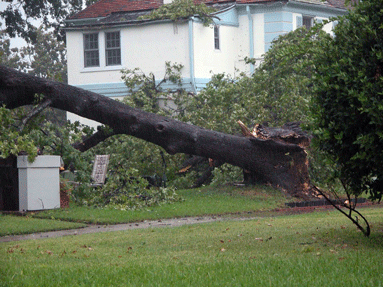
Where will you be when an emergency hits? Have you even thought about it? If you can’t walk and you’re on the 10th floor when a fire happens, how will you get out? If you’re on electric equipment, do you have plans for a power failure? Emergency preparedness for disabled persons is critical.
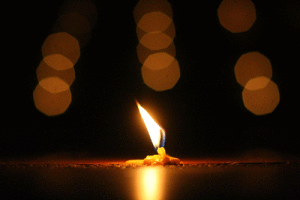
Light source
5:45 pm. Nov. 17. Windy day – 2nd day of extraordinarily strong winds. Uh Oh! No lights. Okay, no big deal. Been there, done that. Found candles. Lit propane heater (it’s cold). Thankfully, we already ate. We wait for lights to come back on. Bedtime, still no lights. Sleep with lots of blankets. Next morning, still no power.
We find out 61% of Spokane lost power — over 4400 separate outages and over 150,000 people. Gonna take awhile. It turned out to be the worst incident our power company had in its’ 126 year history. Our power came back in 40 hours, but many were out over a week.
We learned we were only prepared for a short outage. My special needs include staying warm and protecting my muscles with comfortable (for me) places to recline and to sleep. A generator would help, but they’re expensive. We need to find a place to evacuate, if necessary, to properly care for my muscles.
Are you ready for an emergency?
This incident made me wonder about emergency preparedness for disabled persons. Are we ready? The National Organization for Disability says, “According to the American Red Cross, some 45,000 disasters, man-made and natural, occur in the United States each year.” Have you made plans?
All people face common needs during emergencies, but disabled people encounter additional difficulties. Because disabilities are so varied, each person must come up with a plan tailored for you.
That means advance thinking about what your needs are. No one wants to think about these unpleasant what-ifs; but if even one of them happens, a plan already in place can make a difference in your comfort or even your safety.
Here are four steps to be prepared.
-
Get informed.
- Speculate about different kinds of emergencies.
- Fire, power outage, severe storms, medical emergencies
- Discover what plans your community has in place for emergencies.
- Are there any plans for special needs?
- Think about your special needs.
- What are your unique disabilities?
- What help would you need?
- Find people resources: three people, since any one might not be available to help.
- Consider where you spend a lot of time.
- How would you get home?
- Would you need to get to a shelter.
- Is it set up to care for your special needs?
2. Make a plan.
- Meet with your family and/or helpers to consider communications plans, escape routes, contacts, and transportation needs.
- Remember your pets.
3. Assemble a kit.
A kit should include: food and water for 3 days; kitchen accessories & utensils; radio, flashlight, batteries; sanitation and hygiene supplies; extra clothing and blankets; first-aid kit; whistle; matches; lights; photocopies of ID and credit cards; cash and coins; prescriptions, glasses, hearing aids; supplies for your children and pets; anything for your special needs.
4. Maintain you plan and kit.
- Review your plan every 6 months.
- Restock supplies as needed.
The ARC downloadable .pdf booklet, “Preparing for Disaster for People with Disabilities and Other Special Needs”, has much more information. Two government sources chock full of information are the CDC and disability.gov.
Now, you have lots of information. Are you ready to start? It’s lots of work, but it will pay off big time if you unfortunately need it. Don’t get caught unprepared as we would have been if our power had been out another night. Start soon. Plan thoroughly. Be prepared beforehand!
Please share emergencies you’ve been through and successful or unsuccessful strategies for coping.